

When Connecticut lawmakers raised the annual licensing fee for health care professionals by $5 last year, they assigned the additional money to go to a confidential assistance program for health care practitioners whose medical, mental health or substance abuse issues could prevent them from practicing safely. But so far, the program has yet to receive any of the money.

Arielle Levin Becker
Arielle Levin Becker covered health care for The Connecticut Mirror. She previously worked for The Hartford Courant, most recently as its health reporter, and has also covered small towns, courts and education in Connecticut and New Jersey. She was a finalist in 2009 for the prestigious Livingston Award for Young Journalists, a recipient of a Knight Science Journalism Fellowship and the third-place winner in 2013 for an in-depth piece on caregivers from the National Association of Health Journalists. She is a 2004 graduate of Yale University.

Posted inHealth
UnitedHealthcare will leave CT exchange in 2017
UnitedHealthcare will stop offering plans through Connecticut’s health insurance exchange after this year, continuing the company’s departure from the state-level marketplaces created by the federal health law.

Posted inHealth
Mental health service cuts go along with layoffs
The 68 layoffs announced last week at the state Department of Mental Health and Addiction Services were accompanied by plans to close programs serving people who are homeless or getting out of psychiatric hospitals or prison, an intensive team that works with people living in the community who have mental health or substance issues, and a behavioral health program for veterans.
Posted inHealth
Critics: Proposed children’s dental cut threatens CT’s turnaround
Connecticut leads the nation in the percentage of kids covered by Medicaid who go to the dentist – a dramatic change from a decade earlier, when the state ranked near the bottom, according to a national report. But dentists and advocates who have studied the changes say that progress could be set back under a proposal by Gov. Dannel P. Malloy to cut the Medicaid payment rates for children’s dental care by 10 percent.

Posted inHealth
Session Notes: House passes new water fluoridation standard
Water fluoridation has strong support from public health officials and dentists, but also frequently sparks intense opposition from those who believe it should not be added to public water supplies. Nonetheless, the bill cleared the House by a wide margin after little debate.

Posted inEducation, Health, Money, Politics
Malloy, House Democrats clash over new budget plan


Gov. Dannel P. Malloy challenged fellow Democrats in the legislature Tuesday to help balance the budget by giving up a big portion of their biggest political initiative: a $245 million sales-tax sharing plan with cities and towns.
Posted inHealth, Money, Politics
State worker layoffs continue at three agencies
Gov. Dannel P. Malloy’s administration continued to issue layoff notices Tuesday to state employees, serving pink slips to clerical staff in the Department of Social Services, according to a source close to the affected workers.
Posted inEducation, Energy & Environment, Health, Money, Politics, Transportation
Track the 2016-17 budget as it unfolds

As the state budget process unfolds for the 2016-2017 fiscal year, this tool is designed to help you track how specific programs, places and issues fare in each proposal – and in the final budget.
Posted inHealth
On second try, legislators approve outsourcing plan for brain injury program
Legislators voted Monday to allow the state to move toward outsourcing case management work in a Medicaid program for people with acquired brain injuries, four months after rejecting a similar proposal.

Posted inEducation, Health, Money, Politics, Transportation
Budget plan offers painful cuts but remains out of balance
Updated at 5:18 p.m.
The legislature’s Appropriations Committee adopted a new $19.9 billion budget plan Wednesday, that Democratic leaders insisted restores fairness to a fiscal system that has cut too heavily from social services, health care and education – even though the overall plan is out of balance. Republicans pronounced it a failure.

Posted inHealth
State reaches rebate deal on price of overdose reversal drug
The agreement comes after Attorney General George Jepsen questioned the drug maker about what he called a dramatic increase in the price of naloxone at a time when states were seeking to make it more available to first responders for use in opioid overdose emergencies.

Posted inHealth
Study: State employee wellness plan increased use of preventive care
A wellness program added to the state employee health plan as part of a controversial 2011 concession package led to significant increases in the use of preventive care and a drop in certain emergency room visits, but it’s still too soon to say if it will save the state money, according to a study published Monday in the journal Health Affairs.

Posted inHealth, Money, Politics
Bristol project becomes focus of tensions between state, hospitals
In the latest volley in a longstanding dispute over the financial health of Connecticut hospitals, state budget director Benjamin Barnes on Monday questioned Bristol Hospital’s plans to build a new medical office building and recruit staff, noting that hospital supporters had recently warned that state funding was needed to avoid compromising the community’s health and access to care. The hospital said Barnes was making unfounded accusations and mischaracterizing the situation.
Posted inHealth, Money, Politics
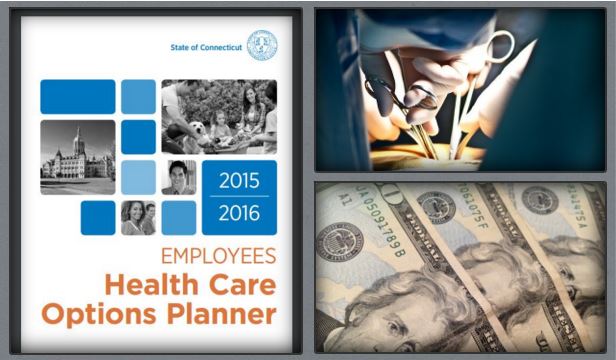
How does the state employee health plan compare?
As lawmakers grapple with a looming budget deficit, some have called for changes to the state employee health plan as a way to save money. Just what’s in the state plan, and how does it compare to other employer-sponsored coverage? Here’s a look.
Posted inHealth
Session Notes: Governor names certificate of need task force
The task force, created by a February executive order, will review the state’s certificate of need process, which governs whether hospitals, nursing homes, residential care facilities and certain physician organizations can open certain facilities, acquire certain equipment, change ownership or eliminate services.