



While the Pentagon says it’s not a competitor to the F-35, the rebirth of the F-15 could cost jobs in Connecticut.
F-35 lobbying war unleashed by Pentagon’s bid to buy rival fighter

Posted inCT Viewpoints
Paid family and medical leave: Too important to outsource

It has been 30 years since the General Assembly enacted Connecticut’s Family and Medical Leave Act (FMLA). That law, in combination with the federal FMLA passed four years later, provides some Connecticut workers with the right to unpaid leave upon the birth or adoption of a child, in order to care for a seriously ill child, spouse or parent or because of the worker’s own serious health condition. When the law passed, supporters said no worker should have to choose between their job and their health, or the health of their family.

Posted inCT Viewpoints
Connecticut is letting some of its communities down
As my home, Hartford has made me into the individual that I am today. Because I have been fortunate enough to rise to an office that allows me to serve the people that made me who I am, I am truly a product of my environment. Growing up in Hartford not only gave me a local perspective, but I also gained a more inclusive perspective because of the experiences I had in my youth, which were unique from any other area of Connecticut. These diverse experiences I speak of range from gentrification, to the wage gap, to mass incarceration.

Posted inPolitics
Lamont, GOP make clear — tolls are a fault line


Two things became clear Wednesday: Gov. Ned Lamont cannot yet answer some crucial questions about tolls, and there are no answers that could entice GOP support.

Posted inHealth
Bill overhauling Connecticut’s sexual harassment, assault laws advances

A similar effort to overhaul Connecticut’s sexual assault and harassment laws failed to clear the General Assembly last year.
Posted inEducation
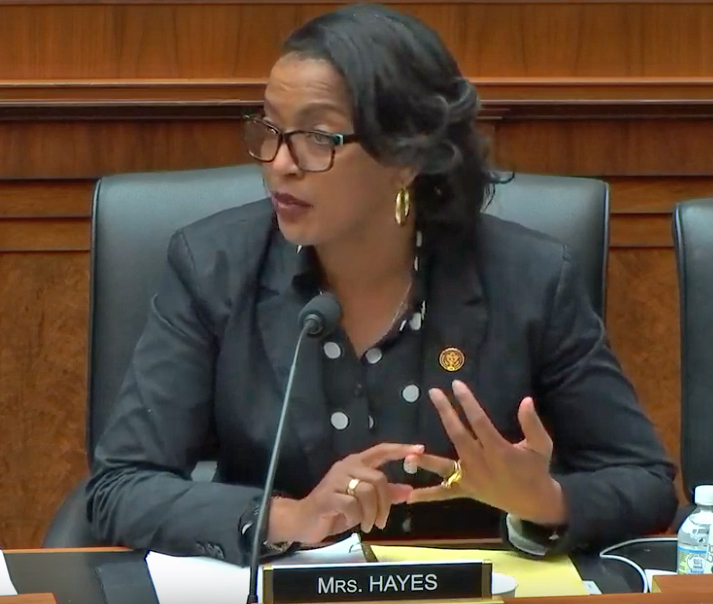
Hayes, DeVos spar over use of federal money to arm teachers
Rep. Jahana Hayes was critical of Education Secretary Betsy DeVos’s refusal to oppose the use of federal money on firearms for schools.

Posted inMoney
Cities and towns could face $24M hit from minimum wage hike
State analysts also warned that the wage hike could add nearly $7 million in expenses to child care providers who participate in the state’s Care4Kids program.

Posted inHealth
Blumenthal backs Sanders ‘Medicare for All’ plan; Murphy does not
The Sanders bill would create a single, government-run health plan to provide coverage to all Americans, much like traditional Medicare provides coverage to those 65 and older.

Posted inEnergy & Environment
Fighting Trump’s environmental policies, Tong picks up where Jepsen left off

Connecticut’s new attorney general is taking on the Trump administration’s environmental rollbacks.

Posted inCT Viewpoints
Children of color need better trauma screening
There is ample evidence affirming that racial and ethnic disparities beginning in early childhood persist over an individual’s life-course. Many of these disparities are linked to adverse childhood experiences (ACEs) that if properly detected could be amenable to treatment.

Posted inCT Viewpoints
CSCU must be more transparent about ‘Students First’ plan
Connecticut State Colleges and Universities Communications Director Leigh Appleby’s recent editorial, attempting to counter the fears of a student who had written a previous editorial, does a disservice to the people of Connecticut and unfairly castigates the student. Moreover, Appleby’s editorial points out many of the issues those of us working at Connecticut’s community colleges have with “Students First.”

Posted inCT Viewpoints
In response to ‘Mental health patient safety must come first’
I write this letter to the editor in attempt to dispel some of the myths tied to requirements necessary for a psychologist to prescribe medication. In Dr. Tichianaa Armah’s April 1 article, she states, “SB 966 would permit psychologists to prescribe medications after taking a 400-hour online class, and supervision by an MD, or APRN for as little as 1,000 hours.” This is particularly troubling as Dr. Armah’s fails to distinguish between credit clock hours and clock hours. Presumably, her calculations come from dividing 400 didactic hours by 40-hour weeks. In doing so, she comes to 10 weeks of training. Similarly, she suggests only 25 weeks of patient contact. However, this is unequivocally false.

Posted inHealth
Bill that would make prison phone calls free advances
Members of the Judiciary Committee denounced the state’s method of profiting off prison phone calls. Connecticut hauled in $7.7 million from the calls last year.

Posted inJustice
Remington to ask Supreme Court to hear Sandy Hook appeal
Remington will base its appeal on a federal law that protects gun makers from liability for the harm caused by their products.

Posted inMoney
Governor: One key labor concession won’t be achieved this year
Gov. Ned Lamont conceded Tuesday that he won’t win new limits on cost-of-living adjustments to state employee pensions in time to build savings into the next state budget.