


On any given day, about 160 young offenders are incarcerated in Connecticut’s juvenile jail or pre-trial detention centers. State officials want to substantially reduce that number, but first they have some obstacles to overcome. First of two articles.
juvenile justice

Posted inCT Viewpoints
Connecticut’s children deserve a second chance, too

The Connecticut Juvenile Training School in Middletown. During its special session, the legislature will consider the governor’s Second Chance proposal, which aims to make sure that a minor criminal offense does not forever bar a person from success. Policymakers should take the opportunity of the special session to extend second chances to children as well. […]

Posted inCT Viewpoints
East Hartford taking on racial disparity in school discipline
Studies show that implicit racial bias is widespread in the U.S. They also show that it can be checked more effectively if we are made aware of our tendencies to be biased. By raising awareness of the problem of disproportionate minority contact, the ongoing dialogues in East Hartford can help adults to make fairer decisions regarding students and youth.
Posted inCT Viewpoints
In Connecticut, there is no ‘achievement gap’
Before students of all colors can succeed equally in Connecticut’s public schools, we must be bluntly honest about why disparities exist. An achievement gap would exist if we gave every student equal opportunities and some children still failed to achieve. In a myriad ways, we do not give all our children the same opportunities. Nowhere is this more apparent than in school discipline policies that exclude children from the classroom.
Posted inCT Viewpoints
Respect children’s rights in Connecticut’s classrooms and courtrooms
Any parents who controlled or disciplined their children by tying them up could expect to be visited by child welfare authorities and police. Yet mechanical restraints have long been commonly employed in Connecticut’s public schools and its juvenile court. The legislature has an opportunity this session to protect our children’s safety and dignity through bills that would limit this practice in our educational and juvenile justice systems.
Posted inNews
Op-Ed: It is time to unshackle Connecticut’s juvenile defendants
When we use shackles in juvenile court, we are not seeing youth with a potential for reform. That is not juvenile justice. In fact, that is no justice at all.
Posted inCT Viewpoints
It is time to unshackle Connecticut’s juvenile defendants
When we use shackles in juvenile court, we are not seeing youth with a potential for reform. That is not juvenile justice. In fact, that is no justice at all.
Posted inCT Viewpoints
Imagine freedom for Connecticut kids
The governor’s proposal to reorganize juvenile justice in Connecticut will dismantle a system that has reduced youth crime and saved taxpayers millions. It would likely lead to worse outcomes and be more expensive than the current system.
Posted inCT Viewpoints
DCF Commissioner Katz is right; children belong in families
Connecticut has made remarkable strides in improving its array of services and evidence-based programs to ensure more kids can grow and thrive in families. Commissioner Joette Katz has not rejected group placement as an option; she has merely required the justification that taking kids away from families demands.

Posted inMoney, Politics
Fiscal issues in forefront as Malloy, legislators start new terms

Gov. Dannel P. Malloy is to focus on how to modernize the state’s aging web of highways, bridges and railroads in a State of the State Address as he begins his second term today, but he and the General Assembly will be facing significant fiscal challenges in 2015. An overview of the key issues confronting the 2015 legislative session.
Posted inEducation
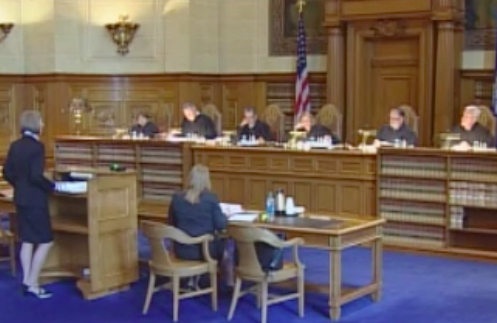
CT Supreme Court examining long, mandatory sentences for juveniles
With Connecticut’s legislature having failed over two sessions to amend state laws to comply with U.S. Supreme Court rulings on long sentences imposed on children, Connecticut’s highest court will soon decide three cases that have the potential to impact dozens of state inmates.
Posted inEducation
Senate Democrats duck sentencing reforms for juveniles
Senate Democrats Thursday defended their failure for the second consecutive year to heed the warnings of the U.S Supreme Court to provide a chance of parole to juveniles sentenced to life sentences — or risk intervention by the courts.
Posted inCT Viewpoints
Op-ed: Unless Senate acts now, years of litigation loom for Connecticut
The Senate should not let HB 5221 — commonsense and necessary legislation — wither and die again.
Posted inCT Viewpoints
Op-ed: Connecticut’s leadership on juvenile justice in jeopardy
What’s going on? Connecticut has been a national leader in juvenile justice policy, but all of a sudden, it’s in danger of losing its crown.

Posted inEducation
Transgender CT teen writes court of her living conditions in prison
Since being sent to live in an adult jail eight days ago, 16-year-old Jane has spent 22 to 23 hours a day in her prison cell.