I am writing to express my concerns over the funding of the Medicare Savings Program here in the state of Connecticut. I am a social worker. I work with low-income seniors all across the state of Connecticut and this issue is extremely important to my clients. I am writing to inform you of what the cuts to the Medicare Savings Plan will do to many low- income seniors across the state.
social services

Posted inCT Viewpoints
Paid family medical leave proposals hurt those they’re trying to protect
One key exemption included in a pair of paid family and medical leave proposals provides all the evidence Connecticut lawmakers need to vote against these costly new mandates. Advocates say businesses have “a moral responsibility” to provide the benefit to their employees, yet the public sector is exempted from both bills, with state and local government workers left behind.

Posted inCT Viewpoints
Why we should believe Hartford is getting better and stronger
In his third State of the City address, Mayor Luke Bronin described Hartford as “better and stronger” and cited awards won and initiatives championed. While residents, public officials, and pundits debate the extent to which “Hartford Has It,” unprecedented collaboration among Hartford’s community-based organizations, anchor institutions, city government, residents, and community activists is reason for hope. Cooperation in developing compelling grant applications to support new city initiatives is impressive evidence of a collective commitment to improve the health and well-being of all residents, including those most disadvantaged.

Posted inCT Viewpoints
Helping people with disabilities live independently saves state dollars
Eugene is 64 years old with a long history of coronary heart disease. He has a tracheotomy to help breathe and spent more than a dozen years in nursing facilities. But after two failed attempts to move out of the facility and into the community, he finally has an apartment of his own and he’s going back to school. His story is marked by both tragedy and successes. But Eugene’s story is also proof that where there is a will to persevere and support to help make it happen, people with disabilities and complex needs can thrive in the community, improve their quality of life and save the state millions in far more expensive care.
Posted inCT Viewpoints
Property tax levies are hurting nonprofit organizations and their clients
MARC Community Resources, a 501(c)(3) non-profit organization providing residential and day services to individuals with intellectual, physical, and developmental disabilities throughout Middlesex County, recently received notification of denied tax exemption on several group homes, as well as two-day programs owned and operated in Cromwell. This tax forces community nonprofits like MARC, burdened by years of state budget cuts, to choose between costly litigation and paying taxes on property that is exempt by state law. Either of these options takes critical funding away from essential services for MARC’s program participants.
Posted inCT Viewpoints
Connecticut must open pathways of opportunity for all
Last week the Commission on Fiscal Stability and Economic Growth released a much-anticipated report that provides a business perspective on the causes and suggested responses necessary to cure our state’s economic woes. Overall, we support the report’s clear call for state investment to spur economic growth with a focus on education, workforce development, transportation, regional development, and core city revitalization. However, we fear the compressed time frame within which the Commission worked resulted in inconsistent — and in some cases unsound — recommendations, many of which are grounded in four fundamental errors. First, the vision and goals articulated at the outset of the report upon which the Commission bases its recommendations for “short-term, medium-term and long-term actions that will enable improved competitiveness and higher growth” omit any mention of the toxic impact of existing racial disparities and income and wealth inequity in the state.
Posted inCT Viewpoints
Better ways to use state funding for people with intellectual and developmental disabilities
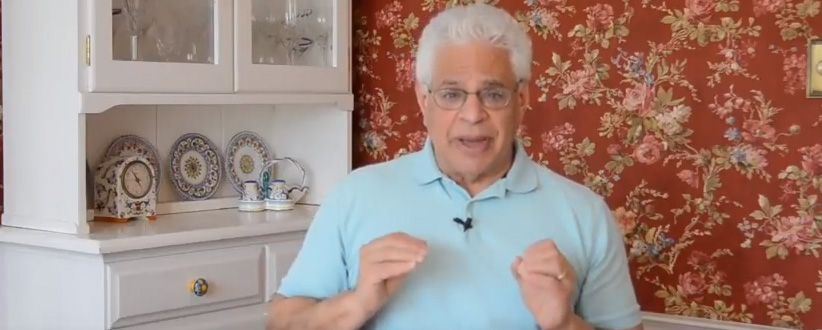
In this 4-minute video, Tom Fiorentio, president of the Arc of Connecticut board of directors, talks about state employee overtime and other issues related to the state’s funding for care for people with intellectual and developmental disabilities.
Posted inCT Viewpoints
Another budget, another (likely) tormented struggle to the finish line.
Much has been said and written about the state of nonprofits in Connecticut and the impact on services being provided to many of our must vulnerable citizens. Nonprofits providing human service exist to partner with government – the one of the people and by the people and for the people– to look out for those most in need, helping government and our society to fulfill one of its most basic obligations. I know we can parse around the edges about what being “in need” means. Some have more restrictive definitions than others, but in the end it’s our collective sense of common humanity that brings most of us together in solidarity and collaboration to be there for folks who, often through no fault of their own, turn to nonprofits for help.

Posted inCT Viewpoints
Funding nonprofits is essential, necessary — and they should not be cut

Connecticut’s community nonprofits are in a precarious state. Year after year of tight state budgets have put increasing pressure on providers, leaving them to face an uncertain future at a time when the demand for essential services is increasing. With the prediction of at least three more years of budget crisis, there is little good news on the fiscal horizon.

Posted inHealth, Money
Panel: CT could reap big savings with more competitive bidding

A new report asserts state government could save as much as $260 million per year — and potentially more in the future — by ensuring all service contracts are subjected to competitive bidding.
Posted inHealth, Money, Politics
Special session over Medicare Savings plan stars in political theater
Legislative leaders struggled Tuesday to find some way to call themselves into special session just before Christmas to restore funds for a popular social services program — but not to address the majority of a $203 million state budget deficit identified last month.
Posted inCT Viewpoints
Why only one month for adoption awareness?
November is Adoption Awareness Month. But when millions of children around the world are waiting, longing for a family to hold them and love them and care for them, why only one month? Let me tell you about just one child who is waiting.

Posted inCT Viewpoints
Child Welfare in Connecticut: The DCF revenge machine
The abuse, starvation and near-death of a year-old baby while under the state’s protection put the Connecticut Department of Children and Families under intense scrutiny by the state’s child advocate and others a year ago — scrutiny that continues today. The following text is the introduction to a longer and more detailed analysis of the so-called “Baby Dylan” case by Richard Wexler, Executive Director of the National Coalition for Child Protection Reform in Alexandria, Va.
Posted inCT Viewpoints
Veterans must be part of Connecticut’s economic recovery and growth
Connecticut Veterans are smart, highly trained, hard-working, dedicated, and team-oriented leaders who are comfortable in changing and dynamic environments. Successfully reintegrated Veteran create economic, political, and social capital in our communities. As we celebrate Veterans Day, let us remember they are national assets and an important part of restoring Connecticut opportunity and launching our great state’s economy on an upward trajectory.
Posted inCT Viewpoints
People with intellectual disabilities deserve a chance to build a life
This year’s complicated and difficult process to develop a state budget has inflicted disproportionate injury on individuals with intellectual and developmental disabilities (I/DD) and their families. While the protracted negotiations continue, young graduates from our public schools have been forced to sit at home in state-imposed isolation, as there is no funding for the critical and longstanding Employment and Day Services program. As difficult as this has been, there is some reason for hope.