Planned Parenthood has been here for 100 years, and one thing is clear: we will never back down and we will never stop fighting to ensure that Planned Parenthood patients have access to the health care they need. All people, including immigrants, people of color, the LGBTQ community, people of faith, and more, are entitled to and deserve high-quality health care without barriers.
social services
Posted inCT Viewpoints
Fasano: ‘DCF failing in its core function, keeping kids safe’
I wholeheartedly agree with child welfare advocates who say that children should, whenever possible and when safe to do so, be kept in their homes. Frankly, I can’t imagine anyone who would disagree. But when obvious red flags are ignored for the sake of keeping a child at home, then there is a serious problem. That is why I disagree with Richard Wexler’s portrayal of what is happening in Connecticut, and his unfair criticism of the state’s child advocate and lawmakers who have raised concerns.

Posted inHealth
DSS’s long-awaited computer fix finally arrives, starting today

The mainframe computer system underpinning operations at the state Department of Social Services is so old, there are few people left who know how to fix it. It’s been blamed for stymieing the agency’s ability to handle programs that serve nearly 1 million people. As its replacement launches in part of the state today, officials say some growing pains are expected.
Posted inCT Viewpoints
Don’t let Connecticut’s developmentally disabled be treated like cattle
The recent decision by the Malloy administration to remove services from the most vulnerable citizens in Connecticut is just terrible! The people who are served by the Southbury Training Center participate in day programs which provide them with meaningful activities and in some cases, gainful employment. Day services, as well as mental health services, are often the bright spot in these individuals’ day, but these programs are slated to be cut or eliminated, and all staff will purportedly be laid off by the end of this year.
Posted inCT Viewpoints
Connecticut needs more mental health success stories — and resources
Connecticut needs to commit funding to all community-based programs: housing, peer supports, food pantries, employment readiness organizations, and clinics where doctors, therapists, case workers and pharmacists work together as teams.
Posted inCT Viewpoints
The Wal-Mart-ization of Connecticut’s support for the disabled?
Concerning shifting human resources from state to private non-profit:
“The legislature’s Program Review and Investigations Committee (PRI) found in 2012 that the price tag for state-operated residential services for disabled adults is $338,000 per year, while the cost for the average community-based residential facility is $129,000.”
Why is it cheaper for nonprofits than for the state? Exactly where is money being saved? If the employees of the nonprofit are being paid much less, with less medical coverage and no pension compared to the state run programs, then nonprofits are no better than Walmart; shifting the burden surreptitiously. How are you saving money?
Posted inCT Viewpoints
Shifting human services to private sector is good for everyone

As our state faces continued budget difficulties, Connecticut’s nonprofit community providers can help by delivering high-quality social services at a lower cost than the same services provided in state-run government facilities.

Posted inNews
Malloy directs agencies to save $130M to balance new CT budget


Gov. Dannel P. Malloy assigned nearly $130 million in total savings targets Thursday to dozens of state agencies to help balance the new state budget that begins Friday. Although legislators assigned limits in some cases to spread the burden out among as many agencies as possible, the cuts fell heaviest on social services and education.
Posted inCT Viewpoints
It is time to demand more for Connecticut children
For working parents, finding and affording quality child care can be a source of significant stress and serious economic burden. Research shows that the birth of a child is one of the leading triggers of poverty in this country. The cost of child care alone, especially child care for very young children, can be prohibitive. A year of infant care can easily cost more than a year of tuition at a state college. That is why Care 4 Kids, Connecticut’s child care subsidy program, is so important. It subsidizes the cost of child care on a sliding scale, making it possible for low-income parents to pay for the care that allows them to work.
Posted inCT Viewpoints
Georgie Porgie and the Connecticut budget cuts
My son is a disabled person. He can’t speak. His name is George. He has things “done for him” – things most people do for themselves like putting toothpaste on a brush, pushing an arm through a winter jacket, getting the water temperature just right for a shower. He lives in a Connecticut-operated, Connecticut-staffed group home called, Brook Street Group Home in Hamden. He lives with his housemates, Anthony, Arthur, Charles and Paula. The workers know them well. They care for them and about them.
Posted inCT Viewpoints
Connecticut’s Dept. of Developmental Services needs radical reform
How much additional evidence do we need that the Department of Developmental Services (DDS) must be radically restructured and reformed? As parents of adult children with intellectual disabilities, we were horrified to read the federal government’s chilling indictment of DDS’s failure to safeguard people in its care: Connecticut Did Not Comply with Federal and State Requirements for Critical Incidents Involving Developmentally Disabled Medicaid Beneficiaries (A-01-14-00002), released May 25.
Posted inCT Viewpoints
Malloy’s new budgeting system is hurting children and families
When he released his budget back in February, Gov. Dannel Malloy announced what sounded like a simple accounting change: Connecticut would no longer use “current services” estimates when building its budget each year. The change may sound technical, but it has a real, harmful effect on funding for state programs that serve children and families.
Posted inCT Viewpoints
We’re winning the battle of homelessness in Connecticut
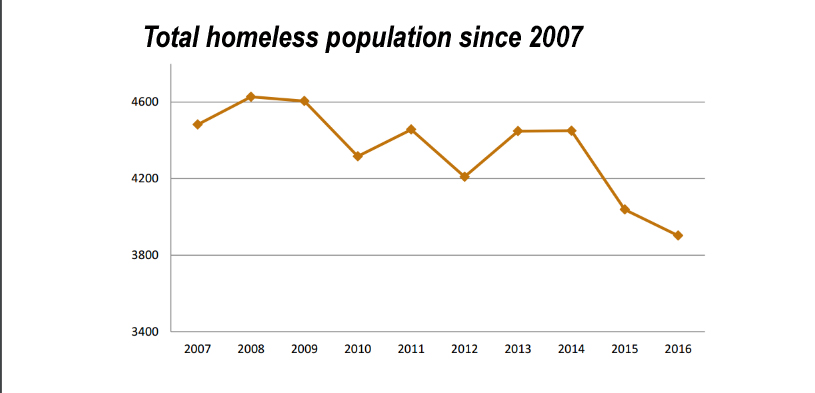
Connecticut’s annual count of homelessness shows that our state continues to make major gains in the effort to end this significant problem, driving overall homelessness down to new lows. The continuing decline follows major investments to end homelessness by the administration of Gov. Dannel P. Malloy and the General Assembly, in tandem with concerted efforts to coordinate and target resources at the community level.

Posted inEducation, Health, Justice, Money, Politics, Transportation
Nonpartisan analysts: Tentative CT budget wipes away lots of red ink
The tentative plan to close a $1 billion hole in Connecticut’s finances starting July 1 also would wipe away more than 40 percent of the red ink threatening state government after the November elections, nonpartisan fiscal analysts reported Tuesday evening.
Posted inCT Viewpoints
Cutting care for Connecticut’s disabled is morally wrong
Connecticut’s continued decimation of the Department of Developmental Services is unjust and morally wrong. As a clergywoman and person of faith, I would also point out that it tragically ignores the Biblical imperative to care for the least of these, our brothers and sisters, our daughters and sons who are too often overlooked and ignored by society.