It’s been six years since he got out of prison, but Roy Trotter still thinks about being locked up when he catches the nightly news. He and his prison-mates watched the news multiple times a day and got in fierce debates — not over policy, but whether the Republican and Democratic parties ever truly cared about Black Americans and whether those behind bars would ever wield any political power to shape elections to come.
“For the most part, the consensus was we would never be at the table, not because we were Black, brown or poor, but because at the end of the day we were incarcerated,” Trotter said. “There’s not even a thought in our minds that one day we can participate in the whole process.”
Trotter wasn’t eligible to vote during the 15 years he spent in prison, but thousands in Connecticut’s correctional facilities are. According to the Department of Correction, approximately 2,150 people as of Aug. 17 — about a third of the total incarcerated population — can vote in this fall’s election.
Those who are locked up pretrial or serving a sentence for a misdemeanor are treated as absentee voters in the town or city where they lived before they were incarcerated. In light of the state’s emphasis on absentee voting in the 2020 elections due to the pandemic, the November election presents a unique opportunity for officials to expand absentee ballot access for a population often forgotten when it comes to voting rights: the incarcerated.
And, for the first time, this year it is the department, not volunteers or advocates, who will work from inside correctional facilities’ walls to ensure that inmates have the information they need to register and cast a ballot — a necessity given that visitors and volunteers cannot enter correctional facilities because of COVID restrictions.
Starting this week, DOC officials will provide every inmate — including those who are not eligible to vote — with an educational packet explaining who is eligible to vote, how to register and how to cast a ballot. The pamphlets will provide the hopeful voters with all the information they need to vote by absentee, including town clerks’ and voter registrars’ office addresses, as well as postage-paid envelopes, should they request them.
For the most part, the consensus was we would never be at the table, not because we were Black, brown or poor, but because at the end of the day we were incarcerated.”
The outreach builds on earlier efforts by volunteers and advocates to expand access to the ballot box.
Nicole Thibeault, the state agency’s director of offender reentry services who is spearheading the department’s role in the initiative, said their prior work left inmates feeling like their lives extended beyond the prison walls.
“It made them feel humanized,” Thibeault said, “and it made them feel more connected to their community.”
Trotter remembers those heated discussions during newscasts having a similar effect. Arguing about politics was a kind of lifeline to their families and homes. He still remembers how those conversations made him feel: “Like you’re in the world.”
[aesop_video src=”vimeo” id=”387690982″ align=”center” caption=”An informational video released by the Secretary of State’s Office regarding which justice-involved citizens are eligible to vote. ” disable_for_mobile=”on” loop=”on” controls=”on” mute=”off” autoplay=”off” viewstart=”off” viewend=”off” show_subtitles=”off” revealfx=”off” overlay_revealfx=”off”]
Raising awareness
Thibeault acknowledges that it’s rare for inmates to ask DOC staff for help with voting. That might not be for lack of interest, but because they don’t know they have the right.
“A lot of people don’t realize they have access,” said James Jeter, who was incarcerated for nearly two decades. He spent three-and-a-half years behind bars before he was convicted and sentenced for his crime. He could have voted in multiple elections, but he had no idea it was even an option.
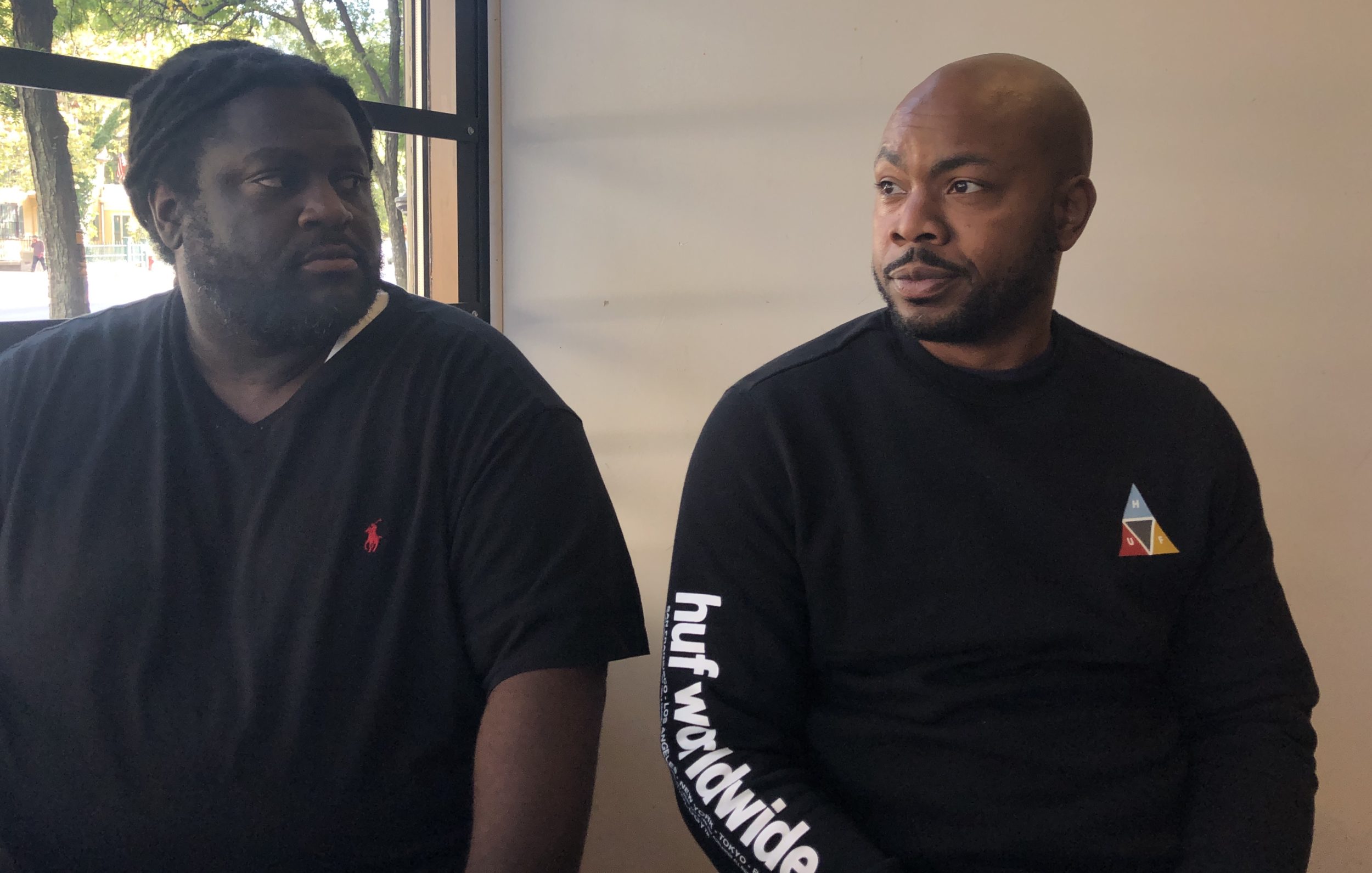
“The reality of what was lost and what could have been accomplished, and what could have grounded me better, hit me once I came home,” said Jeter, who is now the co-director of the Full Citizen Coalition to Unlock the Vote, a group that works to expand access to the ballot box for people whose lives have intersected with the criminal justice system.
Jeter is also working to help incarcerated people vote in the fall. His organization will soon mail educational pamphlets to Hartford, Bridgeport and New Haven Correctional Centers — which house larger numbers of pretrial detainees than most of Connecticut’s 14 correctional facilities — that explain how to request and submit an absentee ballot from jail.
“Having done time and having been in an educational program, I understand how information is dispersed throughout the prison system,” Jeter said of the importance of jail mail.
They don’t get any mailers from the candidates. There’s nobody knocking on their door on their cell. And so literally the only thing they have to go by is the name of the party.”
Casting an absentee ballot is a three-step process: inmates must register to vote, request a ballot and then submit it — potentially daunting considering they have to do them from behind bars. The DOC’s educational packet, which will boil down information from the Secretary of State’s website, is intended to make this process easier. Once it’s done, the DOC will post fliers in each correctional facility’s housing unit and give each inmate, including each person newly admitted to correctional facilities, a copy of the packet.
Inmates who complete the process will list the prison as their mailing address, but they’ll be voting as residents of whatever town they lived in before going to jail.
The DOC will rely on inmates to determine their own eligibility, as opposed to informing those who are eligible.
“We want to make sure we outline the criteria as best we can for them, so that there is no question,” Thibeault said. “There’s no way for us to make a very accurate eligibility list.”
Town clerks will weed out ballots cast by inmates rendered ineligible because they were convicted of a felony, said Sue Larsen, president of the Registrars of Voters Association of Connecticut.
“Every month we get a list from the Secretary of State’s Office that tells us who’s been incarcerated and who’s been released,” Larsen said. “So, the minute we find out someone’s been incarcerated with a felony, we take them off the voter list by reason of a felon.”
Empowering the powerless
Even if an inmate wants to vote, casting a ballot from jail comes with logistical challenges. Those who are locked up pretrial don’t know how long they’ll be incarcerated, complicating the decision to partake in the voting process. Many who are held pretrial on low-level charges today will be out of jail before the election. Plus, absentee ballots don’t contain information about what they have to do if they’re convicted of a felony or released from jail before Election Day, potentially putting them at risk of violating the law.
And, the elephant in the room for everyone voting by absentee in the November election: it remains to be seen how mail-in voting will be affected by changes and cuts to the U.S. Postal Service.
“The best thing that can be done to address that concern for everybody is the ballots have to be printed and distributed and sent out early enough so that people can complete them and get them back early enough,” said Amy Eppler-Epstein, staff attorney at New Haven Legal Aid’s housing unit and a co-teacher of a Yale Law School’s Re-entry Clinic.
Hurdles aside, Eppler-Epstein said the DOC’s leadership is encouraging because eliminating the barriers to incarcerated people voting cannot be accomplished without the state’s help. Putting that system in place could create a path for expanding all inmates’ access to the ballot box one day, should lawmakers pass a measure to end felony disenfranchisement in a future legislative session.
“You need to have the systems that are running the prisons make this part of what they do,” she said. “DOC is absolutely the critical element here.”
Even though I did all that time and … the judge said I was free, I felt freer when I cast my vote..”
The department has an incentive to make sure inmates are given every opportunity to vote. A report from the Connecticut Sentencing Commission published in June warns that the state is potentially vulnerable to lawsuits if the barriers posed by incarceration block eligible voters’ access to the ballot.
Eppler-Epstein joined the Sentencing Commission on two trips to York Correctional Institution, the state’s prison for women, in October 2019, to study pre-pandemic hurdles to inmate voting. Volunteers registered 142 women to vote. Ten wound up casting an absentee ballot the following month, a respectable number, given that they were for municipal elections, said Alex Tsarkov, the commission’s executive director.
“They don’t get any mailers from the candidates. There’s nobody knocking on their door on their cell. And so literally the only thing they have to go by is the name of the party,” Tsarkov said. “Understandably, not a lot of people voted.”
To Jeter, those numbers are encouraging. In spite of likely not knowing much about the candidates, ten people cast ballots and more than 140 took their first steps on the path to political action, daring to dream of changing policies that have, historically, oppressed the racial and ethnic minorities who disproportionately make up Connecticut’s incarcerated population.
“You’re asking them to turn to a system that is constantly turning on them,” Jeter said. “As much as we look to shift and create new structures, we have to change the culture of our communities and our prisons.”
Trotter left prison in 2014. His first job when he got out was working on a state senator’s campaign. He voted for the first time in his life in that election.
“Even though I did all that time and … the judge said I was free,” Trotter said, “I felt freer when I cast my vote.”