


For those who gained coverage under Obamacare, learning to navigate the health care system can take more than an insurance card. This is the third in an occasional series of stories on health care issues in the wake of the Affordable Care Act.

Arielle Levin Becker
Arielle Levin Becker covered health care for The Connecticut Mirror. She previously worked for The Hartford Courant, most recently as its health reporter, and has also covered small towns, courts and education in Connecticut and New Jersey. She was a finalist in 2009 for the prestigious Livingston Award for Young Journalists, a recipient of a Knight Science Journalism Fellowship and the third-place winner in 2013 for an in-depth piece on caregivers from the National Association of Health Journalists. She is a 2004 graduate of Yale University.

Posted inEducation
Panel probes future of CT’s juvenile jails
Discussion by members of a key oversight committee examining conditions at the state’s juvenile jails centered on some fundamental questions: Do young people – many of whom have psychiatric needs and histories of trauma – leave better off than they came in? Can the facility’s problems be addressed through better staff training or programs, or are they symptoms of problems inherent in the jails?

Posted inHealth
Respite center’s closure highlights frustrations for families of the disabled
Founders’ Cottage, a Norwalk respite center that gives families who care for adult children with developmental disabilities an occasional break, is closing next month, and its loss taps into a deeper frustration over years of cuts to services and a shortage of residential placements for people with developmental disabilities.

Posted inHealth
Thousands of Obamacare customers at risk of losing coverage or subsidies
More than 7,000 customers of Connecticut’s health insurance exchange must provide additional documentation to maintain their coverage or the tax credits that subsidize their premiums – a process that has already led to confusion and, in some cases, lost coverage or subsidies, exchange CEO Jim Wadleigh said Tuesday.

Posted inHealth
Having health insurance is one thing, understanding it another
The complexity of health insurance and lagging levels of insurance literacy have long been a concern. But many experts say the problem is particularly urgent now that the federal health law has expanded coverage to millions more people, including many who have limited experience with insurance and some who speak limited English. Second story in an occasional series on major issues shaping health care in the wake of the Affordable Care Act.
Posted inHealth
CT removes age limit for infertility treatment coverage mandate
Health insurance plans sold in Connecticut will no longer be allowed to limit coverage of medically necessary infertility treatment to people under 40, according to new guidance issued by the Connecticut Insurance Department Thursday.

Posted inHealth
Feds say state should give back up to $24 million in Medicaid money
In response, the state Department of Social Services agreed to repay $957,943 to the federal government. But the agency said it does not believe that it should refund the other $23 million.
Posted inHealth
New England uninsured rate less than half the national average
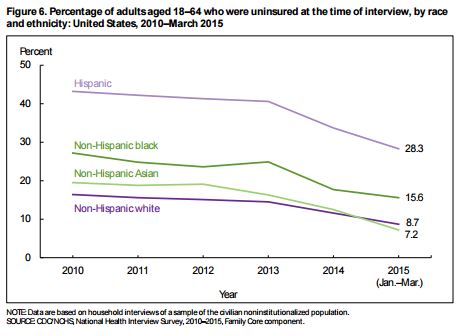
Among New England states, 4.3 percent of residents were uninsured at the time they were interviewed, compared to a national average of 9.2 percent, according to the National Health Interview Survey.
Posted inHealth
The next big push: Getting people health care, not just insurance
Since the federal health law’s major provisions rolled out last year, much of the attention has been on getting people signed up for coverage. But increasingly, the focus is turning to what comes next: making sure those who gained coverage use it to improve their health, and ensuring that the health care system adapts to meet their needs. First story in an occasional series on major issues facing health care.
Posted inHealth
In insurance, premium isn’t the full price. Can a tool help shoppers?
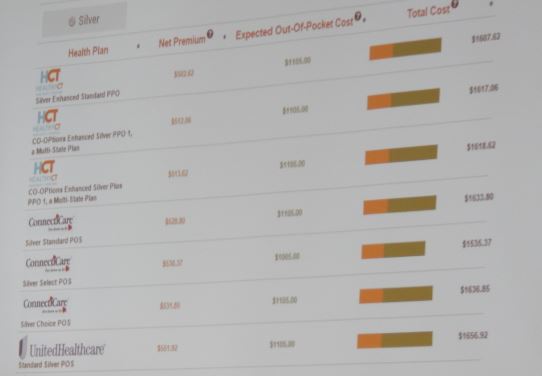
Many people shopping for health plans look for the lowest monthly cost. But experts say that’s not necessarily the best buy. Connecticut’s insurance exchange is trying to reinforce that with a tool to help customers get a fuller picture of their potential costs.

Posted inEducation, Health
Most middle and high schools start too early, CDC study says
In Connecticut, fewer than 5 percent of middle and high schools started at 8:30 or later, one of the lowest rates in the country.

Posted inHealth
Cuts at Windham Hospital prompt worries about access to care
The hospital’s parent company says cuts are needed to keep the hospital open, but critics say the reductions being contemplated could undermine access to care in a part of the state with few hospitals and limited public transportation.

Posted inHealth
Trying to break the cycle that creates health care ‘super-users’
By grappling with a host of issues the medical system hasn’t traditionally handled, a Middletown-based team tries to help patients who use large amounts of health care resources that often have little impact on the psychiatric or social service needs that keep them coming back.

Posted inHealth
Insurer: Cost of cholesterol meds, other drugs driving rate hikes
High-cost specialty drugs, including a new class of cholesterol medications expected to come to market later this year, are key drivers of the need to raise health insurance premiums by nearly 10 percent, ConnectiCare’s chief actuary told regulators Monday

Posted inHealth
What does the Anthem-Cigna deal mean for consumers?
Experts say potential benefits of consolidation include economies of scale that can lead to reduced costs, while potential drawbacks include reduced competition that could have the opposite effect on prices.