



Why do we keep “studying” problems instead of fixing them? Why do we still pay consultants millions of dollars, over and over, to look at the same issues while we avoid spending that money to change the conditions that create them?

We keep hoping there’s an easy solution… that some savvy consultant will find the missing link, shout “Ahah! We’ve found the answer!” and then we can fix it. But we should know that’s not going to happen. If the solutions were easy, we’d have found them long ago.
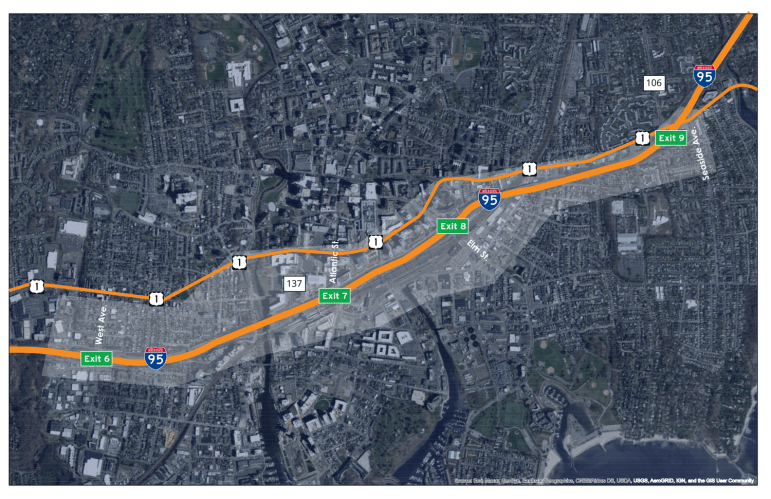
The latest example of wasting money: a $7 million, three-year traffic study of I-95, the fifth such study in 20 years. This time the focus is just a three-mile stretch in downtown Stamford ranked as one of the worst bottlenecks in the nation.
The road sees 200,000 vehicles a day with 40+% of that traffic entering or leaving the highway in Stamford, “The City That Works” (but can’t seem to move its own street traffic). Anybody driving that stretch of I-95 knows what a mess it is most hours of the day.
This new study is looking slightly beyond I-95 itself to include 50 intersections in downtown Stamford as well as the 1,500+ daily pedestrians who dodge cars trying to cross under I-95.
Visit the consultant’s beautiful website, I95Stamford.com, and you are greeted by a background video that immediately makes one skeptical. The video shows traffic freely flowing on I-95, as if on a Sunday morning, not the typical 15 mph bumper-to-bumper flow that greets daily commuters. Do these consultants even understand the problem?
Dig further into the website and you get a sense of why this project is costing $7 million. In the cause of “environmental justice” and social equity all of the documentation is available in English, Spanish and Creole. There are facts sheets, brochures, newsletters and even a telephone hotline. And there are fascinating video archives of their first efforts at community outreach.
Let’s just say that local folks are skeptical. We’ve seen this political posturing, these listening sessions and stakeholder engagement before and know they lead to nothing.
During the Q&A with the consultants in the first public session there were the usual calls for bike lanes, pedestrian crossing and yes, one old timer said we need to replace the highway with a monorail. The consultants listened politely, nodded and said they appreciate “big ideas.”
But the first caller, Zach, really said it best: “This seems like a waste of money. You can’t take three years to study this.” Then he made the best observation of all: “The problem with I-95 is that the trains run too slow. Let’s get more people on the train and out of cars.” Exactly.
So why isn’t the Connecticut Department of Transportation studying Metro-North and the Stamford Transportation Center (which they own) right next to the highway? Why aren’t they figuring out why people are driving instead of taking the train?
Answer those questions and the traffic problems will be solved.