



Three weeks ago, in his sixth State of the State Address, Gov. Dannel Malloy laid out his five “budget principles” and called for a “more predictable, more sustainable, and more transparent” Connecticut budget that “prioritizes funding for core services.” Rightfully, one of the core services Malloy listed was public education. However, for Connecticut to prioritize education and achieve the governor’s budgetary goals, the state must fundamentally change the way it funds its public schools.
Connecticut needs a rational, fair, school funding system

Posted inMoney, Politics
Is a last-minute budget the only one sure to be balanced?

Gov. Dannel P. Malloy challenged legislators recently to break their bad habit of resolving the new state budget in the waning hours of the General Assembly session. But while legislative leaders recognized that last week as a laudable goal, they also said that — if recent history is any guide — an early finish could produce a budget that is unbalanced before the next fiscal year even begins.

Posted inHealth
Key task force: Evidence ‘insufficient’ to recommend universal autism screening
Sparking strong reaction from doctors and child development experts, an influential task force says there’s “insufficient evidence” to argue definitely that the benefits of screening all young children for autism outweigh the harms.

Posted inPolitics
Malloy accuses GOP senators of ‘terrible lies’

WASHINGTON –After a meeting with President Obama late Friday, Gov. Dannel Malloy accused Republican senators of “terrible lies” in claiming it’s too late in the president’s term for him to pick a Supreme Court nominee.
Posted inPolitics
Report: More than 350 CT bridges ‘structurally deficient’
WASHINGTON – A transportation builders’ association says 357 bridges in Connecticut are “structurally deficient,” meaning one or more key elements, such as the deck or substructure, is considered to be in “poor” condition – or worse.
Posted inEducation, Justice, Money, Politics
Judiciary says proposed cuts ‘compromise access to justice’
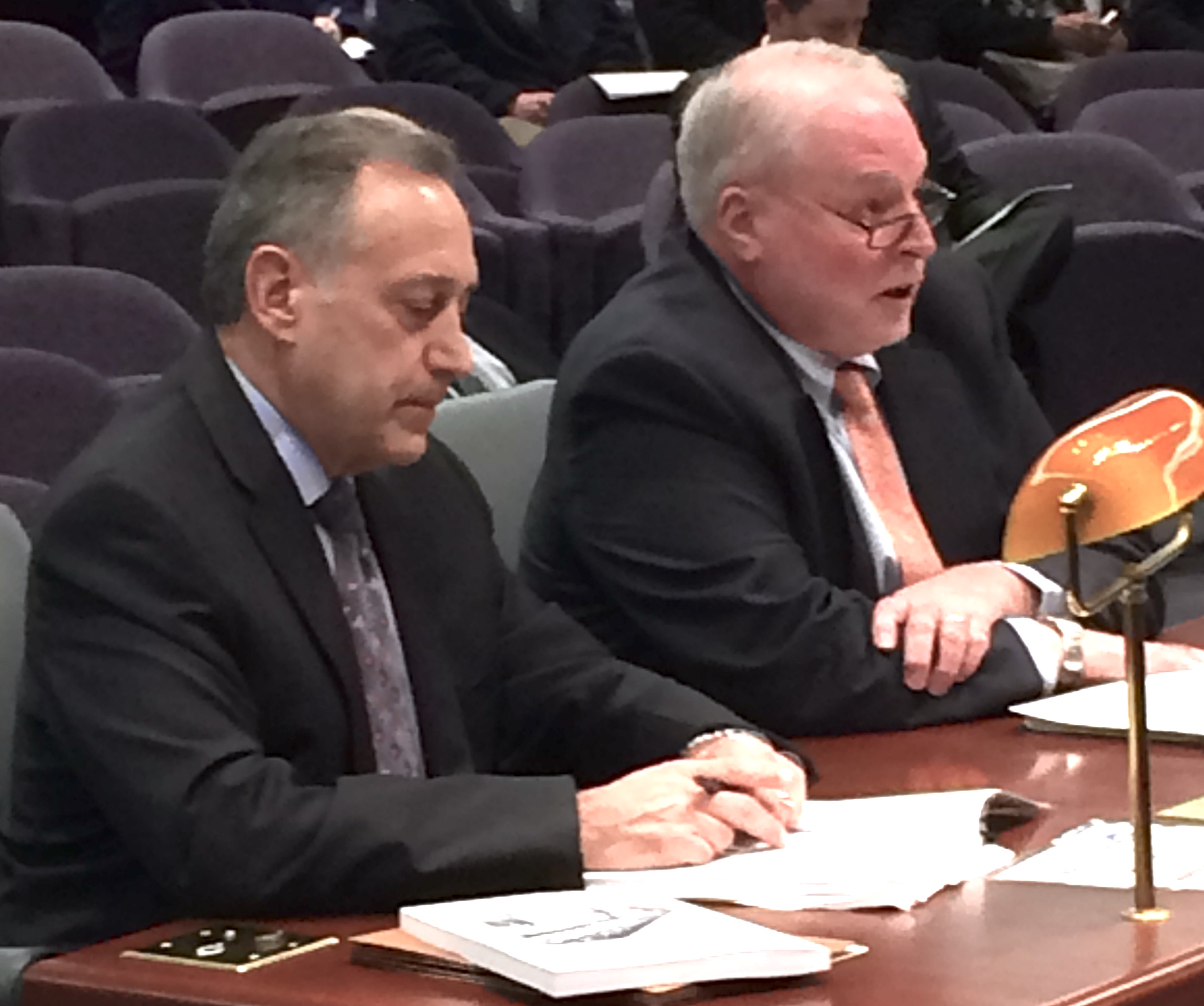
Cutting $64 million from the previously approved funding for the Judicial Branch next fiscal year would result in hundreds of layoffs and force closure of multiple courthouses and a juvenile detention facility, Judge Patrick L. Carroll III, chief court administrator, told the legislature’s Appropriations Committee.
Posted inJustice
Claims commissioner resigns amid controversy

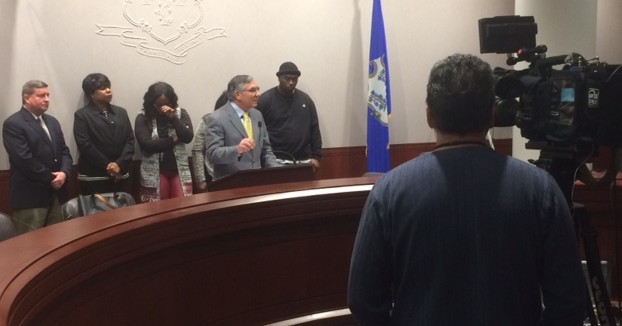
J. Paul Vance Jr., the claims commissioner under fire for awarding $16.8 million to compensate four member members of a New Haven gang whose murder convictions were set aside, submitted a resignation letter last week, the governor’s office said Friday.
Posted inPolitics
Malloy’s agenda at winter NGA meeting
Gov. Dannel P. Malloy will be in Washington D.C. through Monday for the winter meeting of the National Governors Association, a security briefing by the FBI and meetings at the White House with President Obama.

Posted inCT Viewpoints
Legislature must restore the confidence of business leaders
The most critical thing the Connecticut legislature can do to improve our economy is to restore confidence in business leaders that the state can manage, and sustain, its fiscal operations for the foreseeable future. In a recent CBIA survey, 88 percent of business executive respondents indicated state tax policy impacts decisions they make on investment and location decisions.

Posted inCT Viewpoints, Talking Transportation
Secrets for successfully riding Metro-North

Each week, dozens of people ride Metro-North for the first time. This week’s column is to let both new and veteran commuters in on the secrets of a successful rail commute.
Posted inCT Viewpoints
Will Hartford prosper with peanuts and popcorn?
I have lived in Hartford for all my 38 years. I am proud to be raising my four kids here. But I’m getting angry — angry that the city’s new Dunkin Donuts stadium won’t agree to be covered by the city’s Living Wage.

Posted inPolitics
Connecticut hits milestone on fighting homelessness
As Gov. Dannel P. Malloy and the General Assembly debate what government’s core responsibilities are in an era of dwindling revenues, the federal government has certified Connecticut as the second state to effectively end homelessness among veterans. One federal official said, “This is Neil Armstrong walking on the moon kind of stuff.”
Posted inMoney
CT businesses offer first of six blueprints to cut state spending
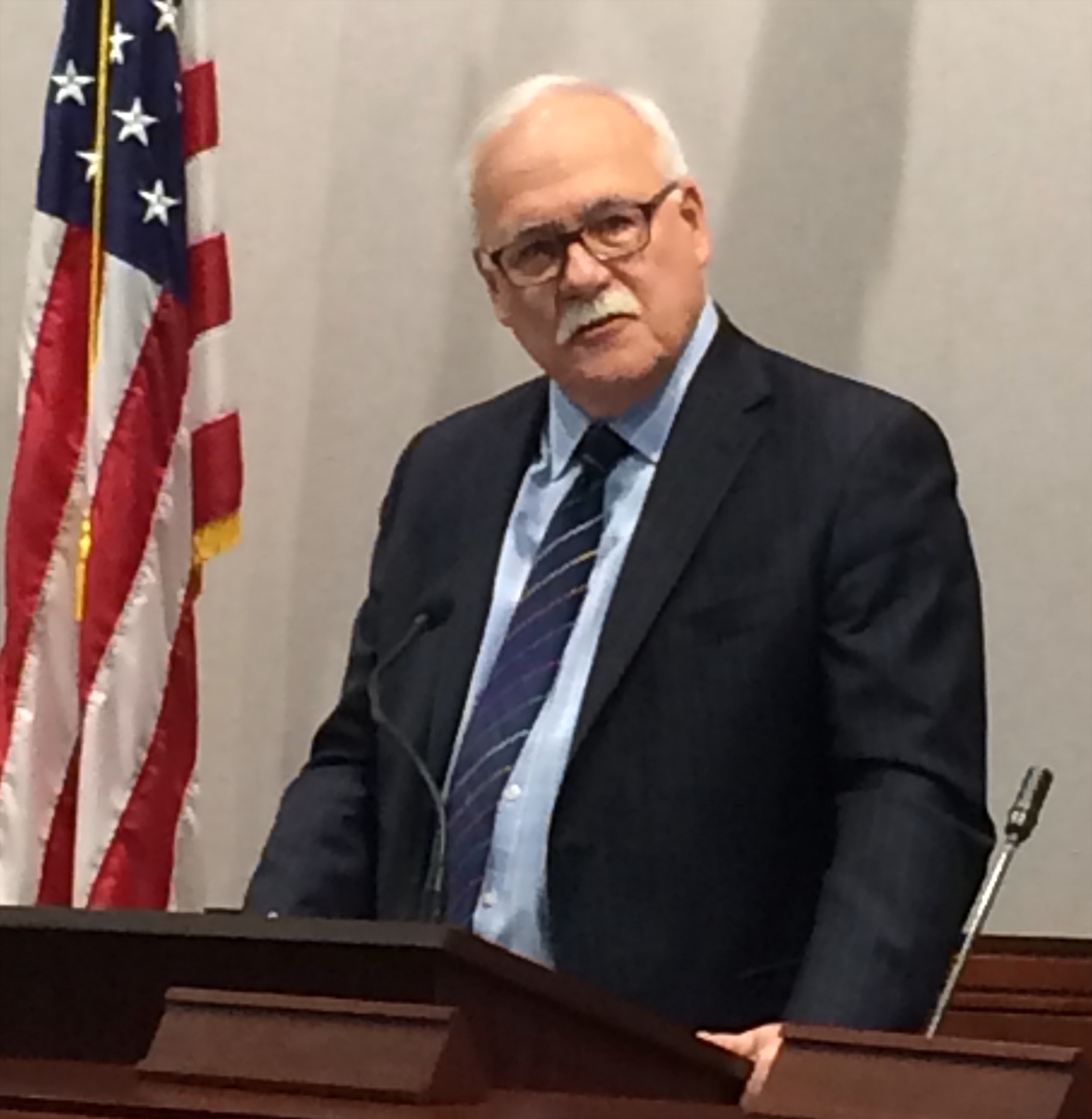
Connecticut’s businesses delivered the first of a promised series of blueprints Wednesday to cut state spending over the long haul. The Connecticut Regional Institute for the 21st Century estimated the state could save $657 million annually on long-term care costs by 2025.

Posted inNews
CT community colleges shrink, squeezing budgets

Connecticut’s community colleges continue to shrink. With 2,393 fewer students than last fall – a 4.6 percent drop – members of the school system’s governing board were told Thursday the schools’ budgets would have to shrink as well.

Posted inCT Viewpoints
CT uses ‘blunt tools’ for evaluating teachers, gets predictable result
Connecticut’s Performance Evaluation Advisory Council (PEAC) met last week to discuss a response to data that show teacher evaluation systems have identified very few people to dismiss, and assign high ratings to most teachers — a pattern which has been reported in many states across the country over the last five years. This shouldn’t be a surprise, because many states are using similar tools for teacher evaluation: a state-specific version of Danielson’s Framework for Teaching (here dubbed the Common Core of Teaching, CCT), or other generic teaching rubric applied to teachers regardless of grade or subject area. When we use the same, blunt tools, we can expect the same, nonspecific results.