

The growing gap between Connecticut’s richest and poorest citizens, which already outstrips that in most other states, has widened dramatically since the last recession. First in a series.
Labor
Posted inPolitics
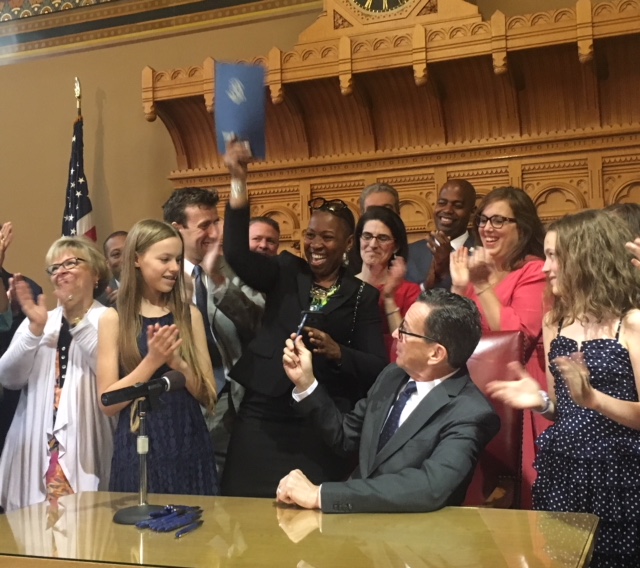
With eye to elections, Malloy signs pay-equity law

Gov. Dannel P. Malloy signed a bipartisan pay-equity bill Tuesday at a celebration skipped by Republicans and colored by the legislature’s failure to deliver other items on an election-year agenda at least partly geared to working women: A $15 minimum wage, paid family and medical leave, and an overhaul of sexual harassment laws.

Posted inCT Viewpoints
SEBAC members: Re-open your agreement before an ‘event’

We — as in everyone who lives and works in our state — have a problem. We will never, ever, be able to generate enough revenue to cover the cash demanded by our unfunded union liabilities. It doesn’t make a difference how we got here. Pointing fingers and demonizing each other does nothing. It’s our fault; we are here and it is up to us to fix it.

Posted inMoney
Legislature overwhelmingly enacts bipartisan CT budget
The legislature overwhelmingly approved a new state budget shortly before their midnight deadline Wednesday that restores aid for towns; reverses health care cuts for the elderly, poor and disabled; and defers a transportation crisis — at least for another year.

Posted inMoney
Collective bargaining, not money, dominates this budget fight
Connecticut’s legislative leaders struggled into the early morning Wednesday in negotiations to resolve what may be the state’s strangest budget fight: It’s not about money.

Posted inMoney
Senate approves raises to avert group home strikes
The Senate gave final approval Saturday to pay hikes designed to head off a strike Monday by 2,500 unionized care providers for the disabled. The Senate vote also means many of those who care for Connecticut’s intellectually and developmentally disabled will be getting their first raise in a decade or longer.
Posted inCT Viewpoints
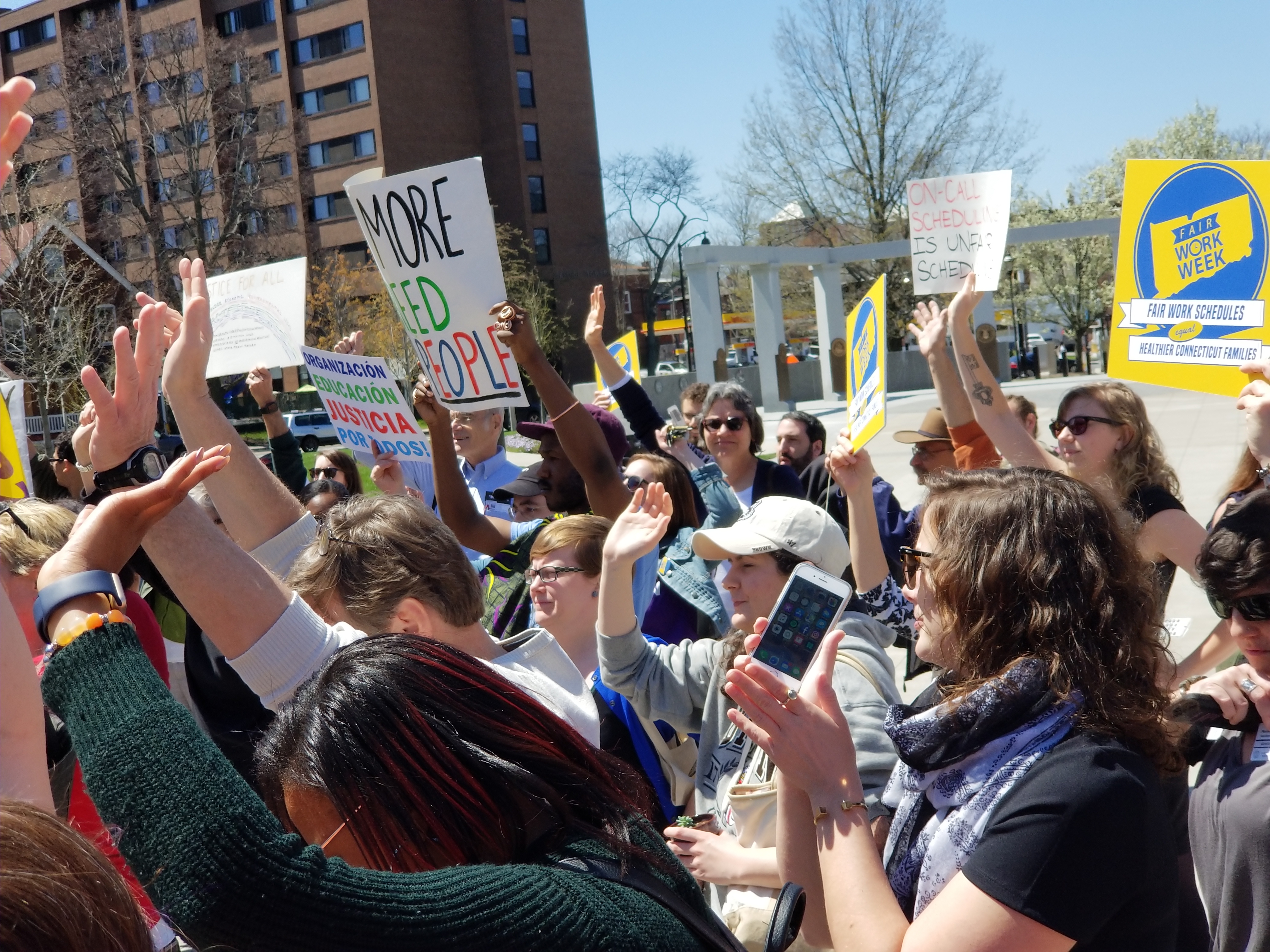
CT’s working families will have to keep waiting for a fair workweek
On Tuesday night —ironically on May Day— Democratic Senators Joan Hartley and Gayle Slossberg voted with Senate Republicans to kill the Fair Workweek bill: SB 318 “A Bill to Stabilize Working Families by Limiting On-Call Shift Scheduling.” Coming a mere week before Connecticut’s legislature adjourns on May 9, this vote all but guarantees that families experiencing the instability that comes with “just-in-time” work scheduling practices will not see any relief.

Posted inMoney
House narrowly approves study that could roil CT casino landscape
The House narrowly approved a bill Friday that would authorize a study of siting a new casino in Connecticut.

Posted inCT Viewpoints
Unions provide best solution to ending sexual harassment
Unions are one of the best ways for working women and men to end sexual harassment and discrimination in the workplace. That is because when working people come together in union, they negotiate a contract with just cause language, and a grievance and arbitration process for dealing with conflict with the employer. With the rise of the #MeToo movement, it has become painfully clear that management and people in positions of power have long been able to sexually harass and abuse women with little to no chance of facing any consequences. That’s why I was stunned to see a recent op-ed [Employers are the key to developing workplace harassment solutions] that suggested employers and management were key to solving the problem of sexual harassment.
Posted inCT Viewpoints
HB 5473 — Bad policy and in conflict with federal labor law
Where do our rights to free speech start and end? Specifically, where does free speech at work start and end? If one particular bill was to become law in Connecticut, the answer to that question would become much more difficult. There is a bill before the General Assembly that would restrict employers’ speech rights. It also runs afoul of federal labor law.

Posted inCT Viewpoints
Safe jobs are every worker’s right
Workplace deaths and injuries that are as common as they are horrific should be the long-gone legacy of a 19th century textile mill. But they remain a terrifying reality today. Every day, 150 American workers die from on-the-job accidents and illnesses, while thousands more are injured. This is a travesty.

Posted inHealth
Workers who care for disabled vote to strike May 7

The employees work for private agencies in group homes and day programs that receive state funding, with the majority of that coming from the state Department of Developmental Services. The strike vote is aimed at prodding the legislature to increase funding for these programs.

Posted inCT Viewpoints
Employers are the key to developing workplace harassment solutions
The workplace is shifting, and it’s clear that what has been tolerated in the past will no longer be acceptable. That’s a good thing. Everyone deserves to work in an environment where they feel safe, and employers must be part of the solution. As it stands now, Connecticut is a leader in creating safe workplaces. Our sexual harassment prevention training laws are some of the most stringent in the nation, and we should all be proud of that.

Posted inCT Viewpoints
Connecticut can’t afford NOT to pass paid family medical leave

I am writing to counter recent arguments that Connecticut’s economic woes mean that we can’t afford to pass ‘compassionate’ bills like House Bill 5387, AN ACT CONCERNING PAID FAMILY MEDICAL LEAVE, despite strong bipartisan support inside the legislature and outside in the real world. Frankly, I am surprised by the lack of vision shown by opponents of the bill. How can we move forward and build our economy without creative solutions? The House passed HB 5386 last week by a vote of 142-4 and I would urge the Senate to move quickly to send it to the governor’s desk.
Posted inMoney
Parties sharply divided over higher ed, labor costs, transportation

Democrats and Republicans offered sharply contrasting spending plans for the next fiscal year. While they shared some common ground involving municipal aid and health care for the elderly and disabled, major disagreements involving labor costs, higher education and revenue stand in the way of another bipartisan budget agreement.