


A bipartisan coalition of Connecticut lawmakers and the governor voiced support Tuesday for a proposed contract that will raise wages, provide workers’ compensation and increase training programs for about 8,500 home-care workers. The House and Senate are scheduled to vote on the contract Wednesday.
Labor

Posted inMoney
Health care, wage issues top minority caucus agenda

Pay equity, a “liveable” wage and protecting women’s health care topped a list of priorities unveiled Monday by the General Assembly’s Black and Puerto Rican Caucus.

Posted inPolitics
Malloy backs higher minimum wage, hedging on how high

Gov. Dannel P. Malloy and Democratic legislators on Thursday outlined similar agendas for the remaining nine weeks of the 2018 legislative session: Pay equity, expanded sick time and other workplace issues largely directed to women, a constituency that polls indicate has further tilted toward Democrats since the election of President Trump.

Posted inMoney
CT lawmakers differ on Trump tariff plan

WASHINGTON — Connecticut lawmakers had different reactions to President Donald Trump’s plan to impose new tariffs of 25 percent on steel imports and 10 percent on aluminum, ranging from praise to condemnation.

Posted inJustice, Politics
A national public-sector union fight comes to Connecticut
The national legal wars over how public-sector unions can collect dues and other fees has reached Connecticut with a lawsuit filed by unionized New Haven firefighters against their statewide affiliate, the Uniformed Professional Fire Fighters Association of Connecticut. The local has the help of the Fairness Center, a firm affiliated with the national right-to-work movement.

Posted inCT Viewpoints
Paid family leave could potentially attract more people to Connecticut

Many members of the General Assembly have promised to address the state’s declining population through public policies that both keep people here and attract newcomers, but we have yet to see much in the way of concrete solutions that aren’t going to cost the state money we don’t have. But one solution that has the potential to improve the state’s economy, draw in and keep talent, all at little to no cost to the state government, is paid family and medical leave.

Posted inMoney
Plan to revitalize CT runs into doubters of all persuasions
A much-anticipated report on stabilizing state finances and jump-starting Connecticut’s economy isn’t likely to get far before legislators adjourn in early May to run for re-election.
Posted inCT Viewpoints
Reform for Connecticut’s pension system
Recently I wrote about the difficulty, even impossibility, of funding Connecticut’s ever-growing pension liability. The article elicited a number of comments, and all agreed that something must be done. Here are my own recommendations for reform. First, a relatively small but significant first step in reforming the system would be to freeze pension benefits for all existing state employees not covered by union contractual obligations. These employees would include non-union members and employees of the state’s executive, legislative, and judicial branches. It would also include all administrators in the University of Connecticut system.
Posted inMoney
State tax overhaul key to plan to revitalize CT
A state panel recommended a dramatic shift in state tax burdens Thursday from wealthy income taxpayers onto businesses and consumers as part of a sweeping plan to stabilize government finances and jump-start the economy.

Posted inCT Viewpoints
A $15/hr wage will foster economic growth in Connecticut
The majority of workers in Hartford and other Connecticut cities are paid less than $15 per hour. That information is found in a 2016 report of the Boston Federal Reserve. An even larger percentage of women and persons of color in those cities earn less than $15. Surprisingly, more than 30 percent of all Connecticut workers earn less than $15. Who are low-wage workers? They are home health and nurse aides, substitute teachers and classroom assistants, fast food and other food service workers, ticket takers, ushers, dishwashers, janitors, cleaners and housekeepers, Bradley airport baggage handlers, cashiers, retail clerks, child-care workers, hotel desk clerks, and dozens more.
Posted inCT Viewpoints
Support a pro-worker agenda for economic growth
Last Wednesday marked the beginning of the 2018 legislative session in Connecticut, and a new opportunity to steer our state in the right direction. To that end, the Connecticut Working Families Organization released its 2018 legislative agenda, a series of concrete and common sense policy recommendations designed to spur economic growth by empowering workers, reducing inequality, and increasing regional competitiveness. For Connecticut’s economy to grow, we need to create the conditions that make success possible for the vast majority of working class families in our state, just as many of our neighboring states have already done.

Posted inJustice, Politics
In CT Senate, a partisan edge to fighting workplace harassment
Connecticut Senate Democrats aligned themselves Tuesday with the burgeoning Me Too and Time’s Up movements by proposing a sweeping election-year bill that they say would be “the largest overhaul in modern Connecticut history of sexual harassment laws.” Republicans objected to their exclusion.

Posted inNews, Politics
The Working Families, pushing Democrats to the left
“I think Democrats have been just afraid of their shadows for a very long time and we’ve seen that in resistance to things like minimum wage increases and paid family leave and fair immigration policies.” But Lindsay Farrell of the Working Families Party says things might be changing. Our Sunday Conversation.
Posted inPolitics
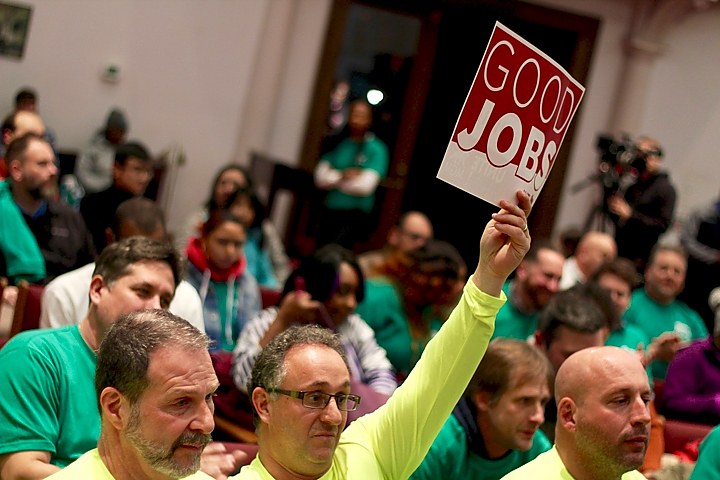
Labor in New Haven bets on MGM casino for Bridgeport
New Haven’s labor unions are flexing their political muscle to back MGM Resorts’s proposed casino in Bridgeport, as a showdown begins over tribal nations’ competing plans.

Posted inMoney, Politics
Labor says ‘tax fairness,’ vibrant cities are keys to CT’s recovery
Labor leaders called Friday for a more progressive state tax system and greater investments in Connecticut’s cities to revitalize the economy and stabilize the budget.