

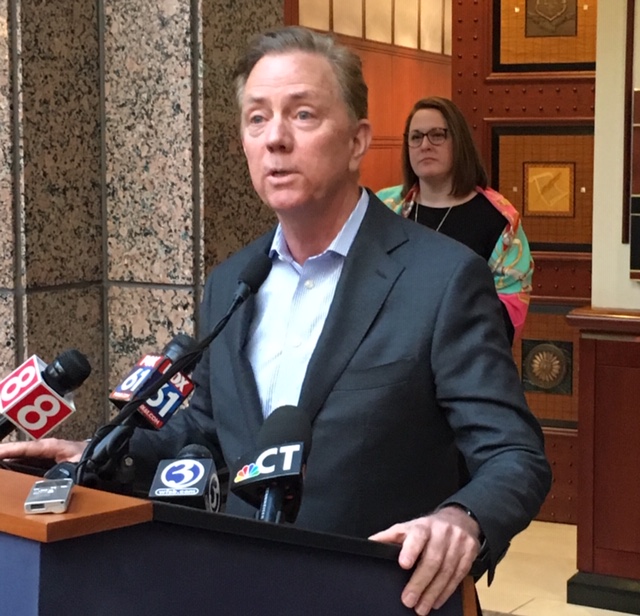

A key legislative panel overwhelmingly sent a bipartisan message late Wednesday to Gov. Ned Lamont: They want greater control over the state’s credit card.
Lawmakers make push to wrest control of CT’s credit card from governor

Posted inJustice
Blumenthal presses Barr to recuse himself from investigations into White House

Attorney General William Barr deflected criticism from Blumenthal and other Democrats about his characterization of Robert Mueller’s report.

Posted inMoney
Democrats push back on Lamont, renew bid to tax CT’s wealthiest households
One day after gutting a 2 percent surcharge on capital gains earnings by wealthy households, the Finance, Revenue and Bonding Committee was expected to revive the bill.

Posted inCT Viewpoints
Senate-approved bill increases victim safety in dual arrests

Last week the Senate unanimously passed a bill to ensure that the names of family violence victims are protected under the Freedom of Information Act. A practice in place since 1981 for victims of sexual assault, this change in the law is necessary to protect victim confidentiality and safety. Members of the media have criticized the bill saying it makes victims less safe by allowing dual arrests to go unreported. We disagree.

Posted inCT Viewpoints
Let’s work constructively to improve recycling here
Legislation is being considered in Hartford to expand the list of beverage containers subject to the state’s container deposit law. This legislation is unnecessary as these containers are currently managed effectively and efficiently in Connecticut’s robust and well-established municipal and business recycling programs. An expanded bottle bill will mean higher costs for municipalities and loss of jobs at Connecticut recycling facilities.

Posted inCT Viewpoints
We need a new approach to educating Connecticut children

There is a cadre of families and children that for decades has not been able to benefit from a regular education. The evidence will support the position that the present Pre-K-12 structure of our schools has exhausted its ability to meet the needs of these children. That their needs are as well defined, and unique as those which were the bases for the enactment CGS 10-76, the special education law. A response equal in intensity, is required to remedy their plight.

Posted inCT Viewpoints
Metro-North must adopt better maintenance practices
Gov. Ned Lamont’s 30-30-30 plan represents a long-needed, concrete goal for a well-operated New Haven Line. The travel times called for therein —30 minutes from New Haven to Stamford and 30 minutes further to Grand Central — are attainable using the right-of-way the state already has. The 30-30-30 plan has the virtue of replacing amorphous “state of good repair” programs that have no accountability attached to them. However, the governor’s vision will go nowhere as long as the management of the railroad under the Connecticut Department of Transportation and its contractor Metro-North Railroad lags behind global best practices.

Posted inJustice
Blumenthal has win in suit against Trump
A federal judge has ruled the case, which claims Trump violated the Constitution’s emoluments clause, can move forward.

Posted inPolitics
Back from Middle East, Murphy has concerns about peace there
Sens. Chris Murphy and MItt Romney have returned from five days in Jordan, Iraq and Israel.
.

Posted inMoney
Growing CT revenues: Too much of a good thing?
Burgeoning state revenues are making it harder for Gov. Ned Lamont to convince his fellow Democrats in the legislature to raise taxes, defer pension debt payments and adopt a lean budget.

Posted inHealth
As U.S. House weighs ‘Medicare for All,” CT Dems push rival plans
Sen. Chris Murphy and Rep. Rosa DeLauro are set to introduce Medicare “buy in” proposals that would keep health insurers in business.
Posted inMoney
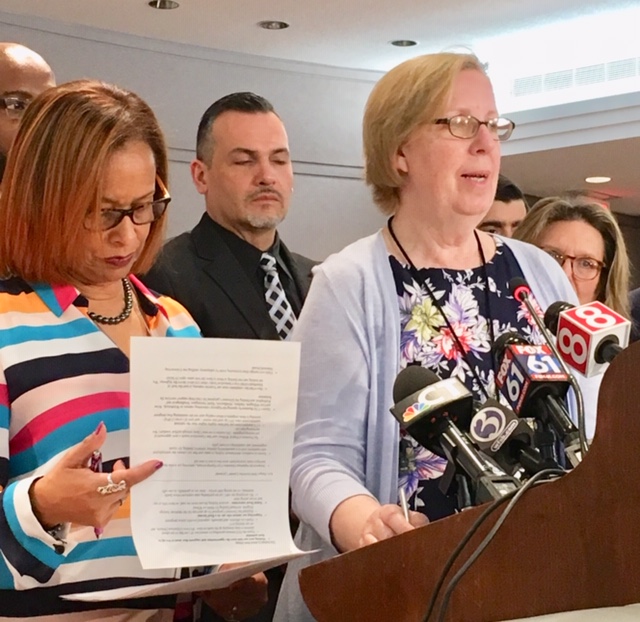
For now, legislators defer to Lamont on capital gains


On spending and taxes, Democratic legislators deferred Tuesday to the more moderate fiscal positions of Gov. Ned Lamont, less a surrender than a postponement of a debate still to come.

Posted inMoney
Legislators’ budget hews to Lamont’s bottom line, but big issues remain unsettled
The $43.3 billion spending plan strays very little from Gov. Ned Lamont’s budget, but it leaves the door open for debate on a host of issues.
Posted inCT Viewpoints
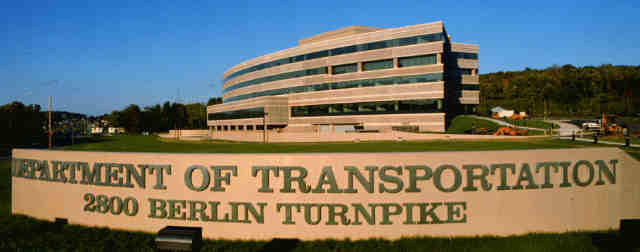
We need a transportation funding compromise
There is unanimous agreement that Connecticut’s infrastructure is in terrible shape: 300+ bridges are rated structurally deficient (their average age is 69 years vs. an expected life of 50 years; the average age of all state bridges is 53 and four are 100+). Today, trains must slow to a crawl to cross the worst bridges to lessen stress.
Posted inCT Viewpoints
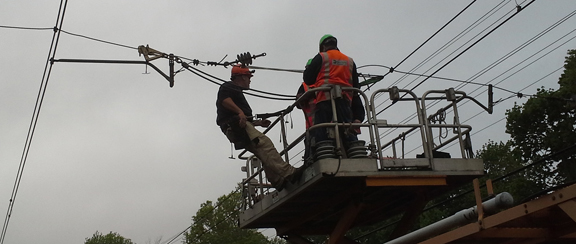
New timetable, slower trains

Rail commuters on Metro-North got a Spring Surprise recently: a new timetable with slower running times. Rush hour trains now leave earlier and arrive later than before, adding anywhere from one to ten minutes to published running times, depending on the length of the trip. But hey! What happened to that 30-30-30 plan for faster trains? Why are the trains running slower, not faster? In a word: repairs.