


The early days of March 2020 were something of a blur — at the time, and looking back.
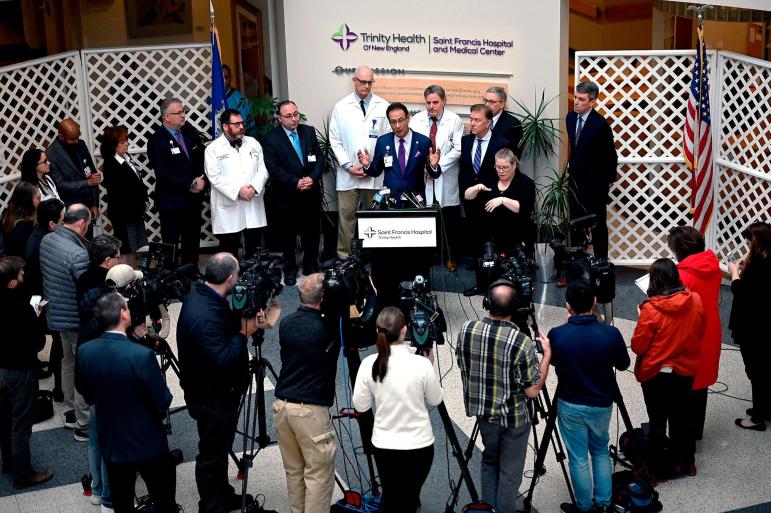
The state had confirmed its first case of coronavirus. Hospitals were working through the logistical challenges of preparing for an onslaught of patients with a sickness doctors barely understood.
Gov. Ned Lamont froze travel by state employees and discouraged large gatherings. Lawmakers scaled back their activities at the Capitol, and staff undertook a deep cleaning of the building. Nursing homes were directed to limit visitors.
On March 10, Lamont declared a public health emergency. “We don’t do this lightly,” he said at a press conference, unmasked. “We’ve got to be prepared for what could be happening.”
The following day, March 11, 2020, the World Health Organization declared COVID-19 a global pandemic.

In Connecticut, it was already clear the state was in the midst of a day-to-day life-altering event. But far more remained entirely unclear.
Testing was extremely limited, with state labs processing just 20 tests a day. Many of the state’s school districts canceled classes, leaving nearly half of all public school students stuck at home. Business declined sharply in the restaurant, hospitality and tourism sectors, and manufacturing companies weren’t sure how to continue operations with workers staying home.
Connecticut’s epidemiologist, Dr. Matthew Cartter, estimated that 10% to 20% of state residents could become infected within a few months. “It is only a matter of time before we have widespread community transmission,” he said.

Soon, lockdown was upon us. The casinos closed, as did bars, gyms and movie theaters.
“It’s tough medicine,” Lamont said as he ordered the lockdown. “I think it’s the right medicine.”
On March 18, with 96 confirmed cases across the state, Lamont announced the first death from COVID-19 in Connecticut — an 88-year-old man who was hospitalized in Danbury after falling ill in a Ridgefield assisted-living facility.

Within a week of the pandemic declaration, clear disparities began to emerge. Unemployment claims skyrocketed. Some school districts transitioned easily into remote learning; others were scrambling. Homeless shelters were brainstorming what to do, as the state’s social safety net stretched to accommodate a spike in need.
Concerns rose over transmission at nursing homes and in state prisons. Lamont ordered schools to remain closed until fall. An emergency relief program for businesses was immediately overwhelmed by demand.
It was somehow still March.

There was no playbook, state leaders said. “This crisis touches every corner of society, of our economy, of our daily life,” said Josh Geballe, the governor’s chief operating officer. “And each day we are presented with new challenges associated with those different aspects.”
Covid-19 cases began to rise rapidly, reaching 1,000 on March 26 and 2,000 just days later. In quiet neighborhoods around the state, sirens pierced the air too frequently.
It was an approaching storm, a surge, a tsunami.