There are more than 1,000 youth courts across the country, but in Connecticut, there’s only one. As its director Jean Michaud, explains in this Sunday Conversation, Project Youth Court in New Haven uses trained teenage volunteers to run hearings for young, non-violent misdemeanor offenders.
criminal justice reform

Posted inJustice, News
James Forman Jr., tackling criminal justice from multiple angles
James Forman Jr. is a professor at Yale Law School, where he teaches courses including constitutional law, “Race, Class and Punishment” and a seminar where he brings law students into a Connecticut prison to take a class alongside people who are incarcerated. In this Sunday conversation, The Mirror sat down with Forman at his office in New Haven to hear about his career, the classes he’s teaching at Yale, and his 2017 book called “Locking Up Our Own: Crime and Punishment in Black America.”

Posted inJustice
New-crime recidivism rates continue to show modest improvement

Inmates released in 2014 were arrested, convicted and sentenced for new crimes at lower rates than past groups, continuing a positive trend in those post-prison outcomes, but returns to prison are not declining at the same rate.

Posted inJustice
A first lady who wants Connecticut to ‘reimagine justice’

First Lady Cathy Malloy interrupted an impromptu interview Wednesday at the two-day conference she and Gov. Dannel P. Malloy are co-hosting, Reimagining Justice, to say goodbye to a friend, Tracie Bernardi. The two women hugged, and Bernardi said, “I love you.” They met years ago on Malloy’s visit to prison. Bernardi was doing time for murder.

Posted inJustice
Judiciary Committee approves compromise bail reforms
The revised bill is a step toward limiting the number of defendants who are jailed awaiting trial because of their inability to afford a relatively modest bail or the services of a bail agent, but falls short of the governor’s goal of eliminating the need for a for-profit bail industry in Connecticut.

Posted inJustice
A prison experiments with the young, the reckless and neuroscience
CHESHIRE — Warden Scott Erfe once asked a 20-year-old inmate with a habit of assaulting prison classroom staff, “What is your malfunction?” He is about to host a project to test the notion that pretty much every 18-to-25-year-old inmate has a malfunction: a brain that doesn’t mature until 25.
Posted inJustice, Politics
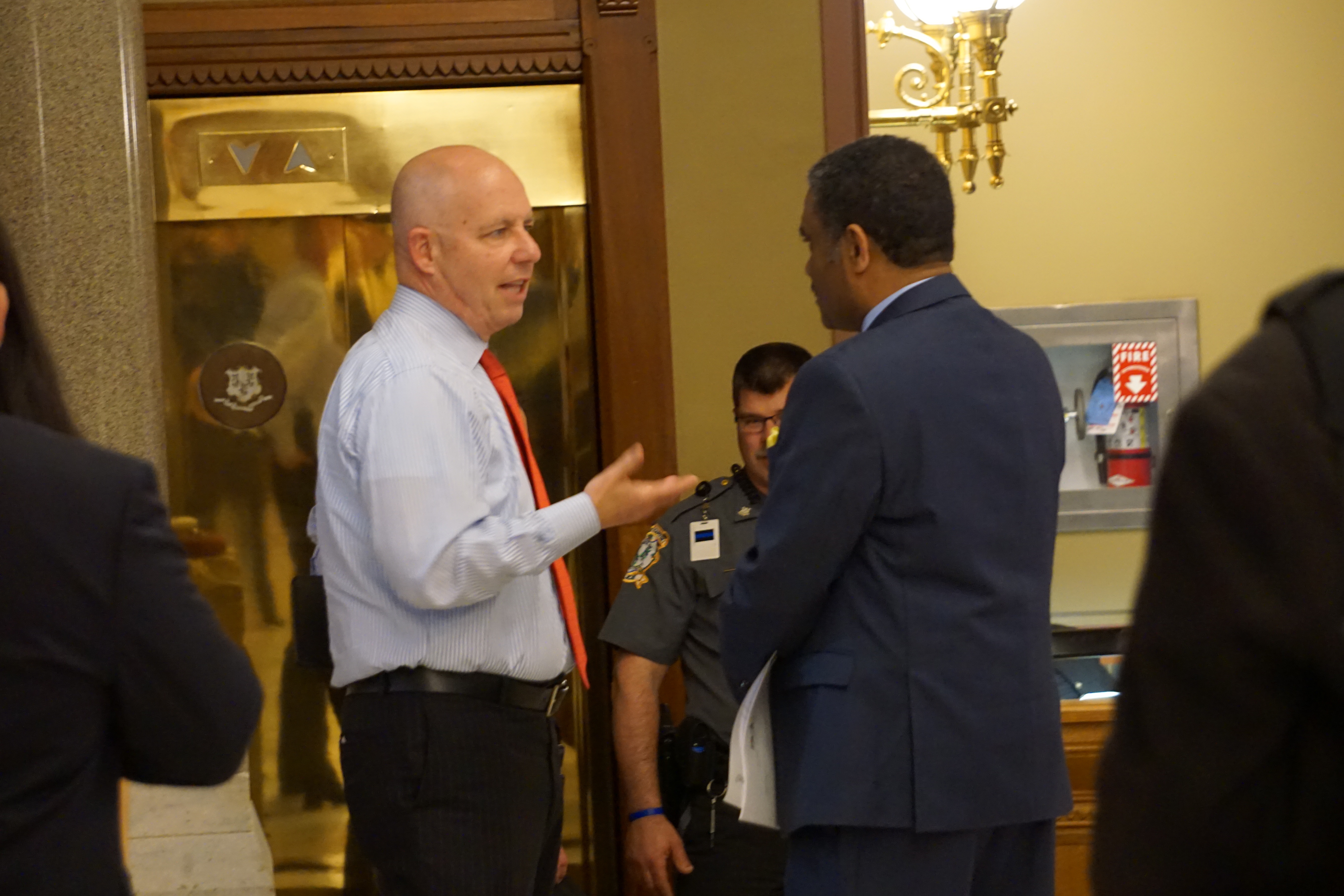
Like Senate, House defers vote on Malloy’s ‘Second Chance 2.0’
House Speaker J. Brendan Sharkey, D-Hamden, postponed a vote Friday on Gov. Dannel P. Malloy’s proposal to reform the bail and juvenile-justice systems, underscoring the administration’s difficulties in finding sufficient votes for the governor’s signature criminal-justice bill.

Posted inJustice
A lesson on crime, redemption and trees at Yale
It’s all a bit movie-of-the-weekish, mixing ex-cons, the Ivy League, and a goal of reforesting a city famously hit hard by Dutch elm disease. But it’s been working for a half dozen years now, boasting a high survival rate for the trees and low recidivism for the guys.
Posted inJustice, Politics
Malloy dubs bail, sentencing reforms as ‘Second Chance 2.0’
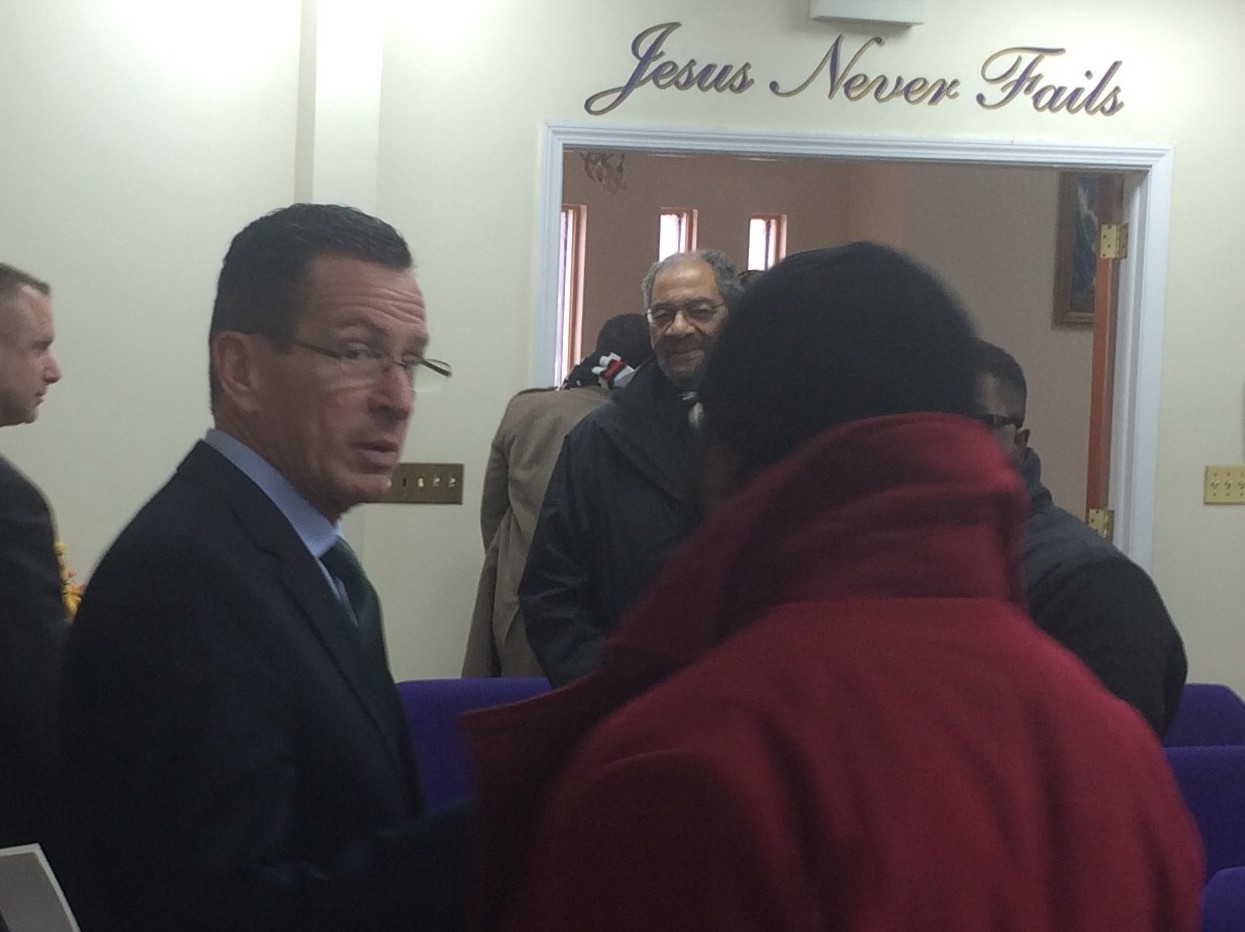
Gov. Dannel P. Malloy came to the Citadel of Love, a black church in the North End of Hartford, on Thursday to roll out “Second Chance 2.0,” a second round of proposals to negate the permanence of criminal mistakes, especially those committed by the young. He will ask the legislature next week to curtail bail for minor crimes, treat many defendants younger than 21 as juveniles and broaden the reach of a record-expunging youthful offender law.

Posted inNews
At Harvard, hints of what Malloy intends on justice reform
CAMBRIDGE, Mass. — Gov. Dannel P. Malloy is to present details on his plans for criminal justice reform Thursday in Hartford, but he shared his thoughts on bail reform and treating criminal defendants as juveniles until they turn 21 at Harvard. A preview on what’s to come this week.
Posted inEducation, Justice
Malloy: Raise the age for juvenile justice system to 20

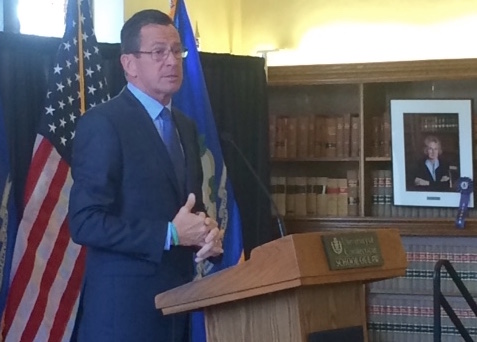
In a major policy speech Friday at a criminal-justice symposium, Gov. Dannel P. Malloy proposed overhauling Connecticut’s bail system and making the state the first in the U.S. to treat defendants as juveniles up to age 20. Both proposals could significantly lower incarceration rates.

Posted inJustice
A bittersweet day for Second Chances in New Haven
NEW HAVEN – Waiting for the governor to arrive for the press conference about criminal justice reform, Police Chief Dean Esserman talked shop with Michael P. Lawlor, the governor’s criminal justice adviser. There had been a homicide the previous night, a young man shot on the street.